Stretch, drop and rake: the three numbers that decide how your chopper sits
Three measurements decide whether a hardtail looks right and rides straight. Most people get one of them wrong. Here is what each one does, in plain language, before you order anything cut.
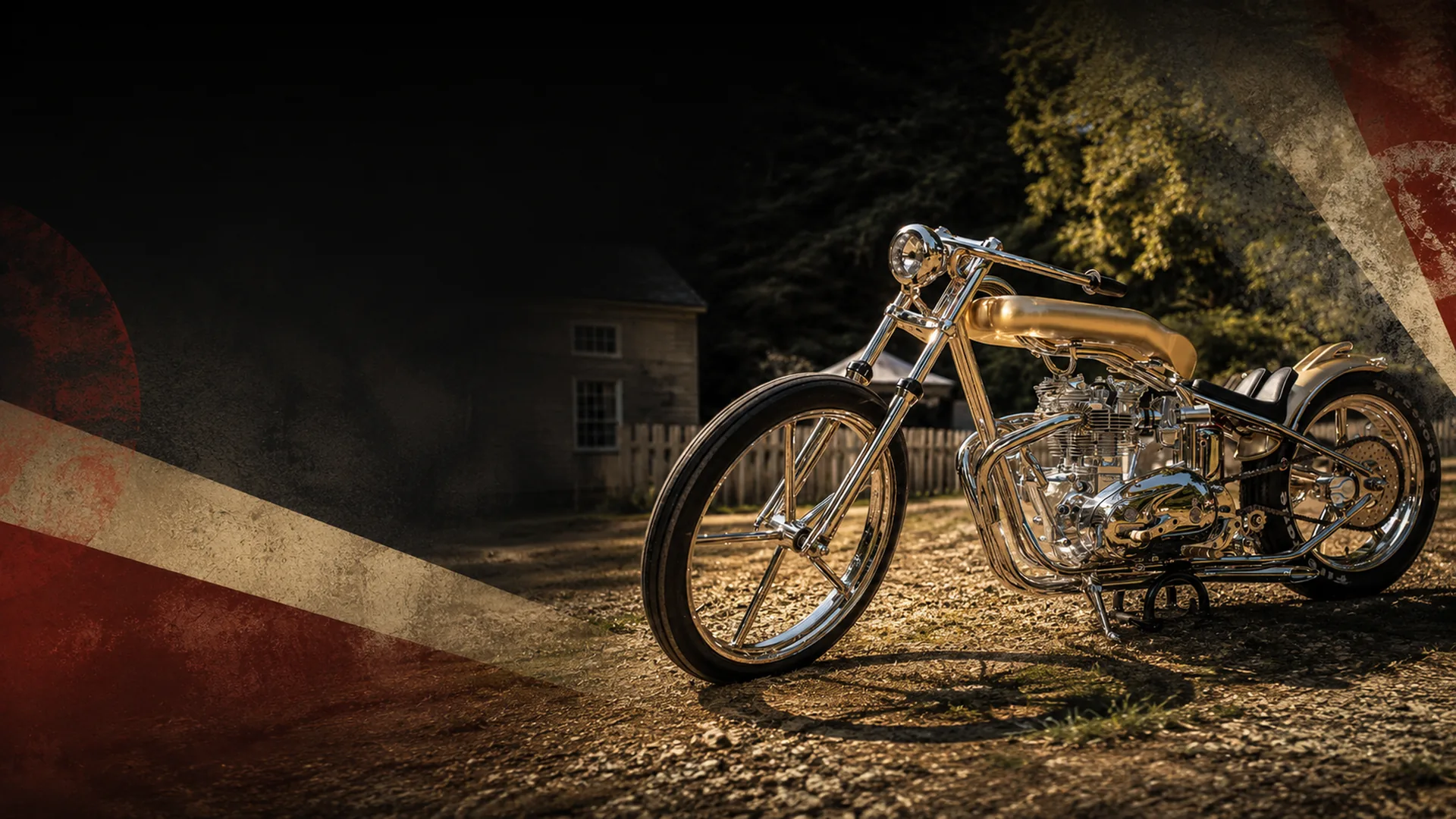
Three measurements decide whether a chopper looks right and rides straight: stretch, drop and rake. They get talked about as if they were style choices. Two of them are geometry, and getting one wrong will give you a bike that either handles badly or will not go round a corner without the tyre touching something.
Here is what each one actually does, and the ranges we cut most often.
Stretch — how much longer the frame gets
Stretch is length added to the frame behind the seat post, pushing the rear axle further back. It is measured in inches, along the top of the frame.
What it changes: the wheelbase, and the look. More stretch gives you the long, low profile most people picture when they think of a chopper, and it makes the bike more stable in a straight line. It also makes it slower to turn, harder to get on the stand, and heavier to push around a garage.
What we cut most: 2 to 4 inches on a Triumph or BSA. Two inches is barely noticeable to look at but changes how the bike sits. Four is a clear statement. Beyond six, you are into territory where the chain run, the brake rod and the exhaust all need rethinking, and we will tell you that before we cut rather than after.
Drop — how much lower it sits
Drop lowers the rear axle relative to the frame, so the whole back of the bike sits closer to the ground. Also measured in inches.
This is the one people forget, and it is the one that changes the silhouette most. Stretch alone makes a bike long. Stretch with drop makes it long and low, which is the stance most people are actually chasing when they ask for stretch.
What it costs you: ground clearance, and room for the tyre. Every inch of drop is an inch less space between the tyre and the fender, and between the frame rails and the road. On a bike that is going to be ridden rather than parked, 2 inches is a lot and 4 is close to the limit before the exhaust starts touching down in corners.
What we cut most: 1 to 3 inches.
Rake — the angle of the front end
Rake is the angle of the steering head measured from vertical, in degrees. Stock on most of these bikes is somewhere around 27 to 30 degrees. Raking the frame opens that angle out, pushing the front wheel forward.
This is the one that is not a style choice. Rake and trail together decide whether the bike steers. Too much rake and the front end goes light, the steering gets vague at speed, and low-speed turns become an argument. It also changes what length fork you need — a raked frame with a stock-length front end drops the nose and undoes the point of raking it.
Rake and fork length have to be worked out together. If somebody quotes you a rake without asking what front end you are running, they are guessing.
The order to decide them in
- What is the bike for? Ridden every weekend, or rolled out twice a summer? That single answer sets the sensible limits on all three numbers.
- Front end first. Springer, narrow glide, length. Rake follows from it, not the other way round.
- Then stance. Stretch and drop together — decide the look you want, and we will tell you what it costs in clearance.
- Then the parts that have to fit round it. Tyre size, fender, exhaust route, chain and brake rod. This is where an extra inch of drop quietly turns into a new exhaust.
What we need from you to quote
Year, make and model. The front end you are running or plan to run, and its length. The tyre size front and rear. What the bike is for. And any measurement you have already committed to — an engine that is already mounted, a tank you are not changing.
You do not need to know the numbers before you get in touch. Most people do not, and working them out is part of what we do. But the more of that list you can answer, the closer the first quote will be to the final one.
Every frame we make is cut, jigged in our own fixtures and finished here, and you get the price before anything is cut.